
SEO, AEO and GEO in 2027: Winning Visibility in Google and AI Answers
Published November 16, 2026Updated November 21, 2026
- 1Summary
- 2AEO vs GEO vs SEO 2027: Understanding the Three Approaches
- 3How AI Search Is Changing SEO in 2027
- 4GEO vs SEO Strategy 2027: Where Do They Overlap?
- 5Entity Signals and Brand Citations: What They Mean for GEO
- 6SEO Services for AI Search 2027: What Should Businesses Focus On?
- 7AEO Agency 2027: When Do You Need Answer Engine Optimisation Services?
- 8GEO Agency 2027: Improving Visibility Across Generative Engines
- 9Building an AI Search Marketing Strategy for 2027
- 10How Awrange Approaches SEO and AI Search Visibility
- 11FAQs: SEO, AEO and GEO in 2027
- 12What is SEO vs GEO vs AEO?
- 13Which is better, SEO or GEO?
- 14Do I still need SEO if I use GEO and AEO?
Summary
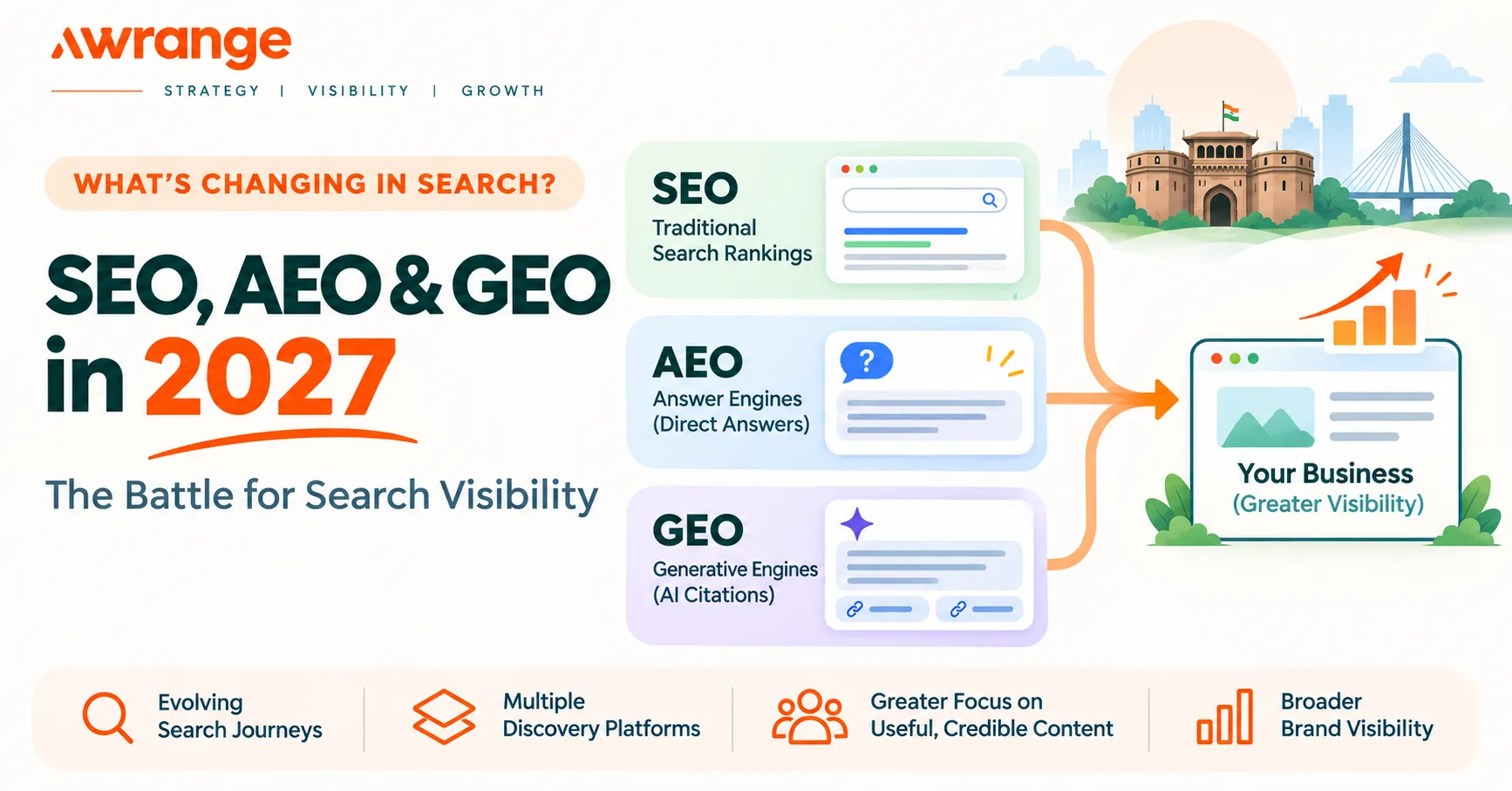
Search is no longer limited to a list of links. People are finding information through Google results, direct answers and generative AI platforms. AEO vs GEO vs SEO 2027 examines how businesses can maintain visibility across these different search experiences. SEO helps websites rank in traditional search, AEO makes content useful for direct answers, and GEO focuses on how brands appear in AI-generated responses. Although each has a different purpose, they work towards the same goal: helping people find relevant, reliable information about a business.
AEO vs GEO vs SEO 2027: Understanding the Three Approaches
SEO, AEO and GEO are often discussed together, but they address different ways people search for information.
Search Engine Optimisation (SEO) improves a website’s visibility in traditional search results. It involves keyword research, technical optimisation, content quality, website structure and relevant backlinks.
Answer Engine Optimisation (AEO) focuses on making website content easier for answer engines to understand and use when responding to specific questions. Featured snippets, voice search and AI-powered answers are relevant to this approach.
Generative Engine Optimisation (GEO) focuses on how a brand and its information are understood and referenced in responses generated by AI platforms. These platforms may combine information from several sources to answer a user’s query.
| Area | SEO | AEO | GEO |
| Main objective | Improve search rankings | Provide clear answers | Improve visibility in AI-generated responses |
| Focus | Search engines | Answer engines | Generative engines |
| Content approach | Relevant, optimised pages | Direct, question-based answers | Useful, detailed and well-supported information |
| Visibility | Organic search results | Featured snippets and direct answers | AI mentions and citations |
These approaches are not competing alternatives. A business can use all three to reach people across different search experiences.
How AI Search Is Changing SEO in 2027
Traditional search remains important, but the experience is changing. People can now find information through AI-generated summaries and conversational search, sometimes without opening several websites.
For businesses, this creates another layer of visibility to consider. A website may appear in Google’s organic results while its information is also referenced in an AI-generated response. In other cases, users may receive an answer without visiting the original website.
This is one reason AEO vs GEO vs SEO 2027 matters when planning search activity. Keyword rankings and organic traffic still matter, but they do not tell the entire story. Businesses should also review relevant impressions, qualified enquiries, brand visibility and available AI referral data.
The fundamentals have not disappeared. Technical accessibility, relevant content, website authority and search intent continue to influence how a business is discovered.
GEO vs SEO Strategy 2027: Where Do They Overlap?
A GEO vs SEO strategy in 2027 should build on existing SEO foundations rather than treat AI search as a completely separate activity.
Both approaches depend on content that is relevant, accessible and useful. However, SEO focuses on a page’s performance in search results, while GEO considers whether information from a brand may be understood and referenced in generative AI responses.
A practical strategy should cover both:
For SEO:
- Research keywords based on actual customer searches.
- Create dedicated pages for important services.
- Improve internal linking and website structure.
- Address technical issues affecting crawling and indexing.
- Publish relevant content that meets search intent.
For GEO:
- Explain topics clearly and provide sufficient context.
- Keep business and service information consistent online.
- Support important claims with credible sources.
- Use descriptive headings and organised content.
- Build relevant brand mentions across credible websites.
The objective is not to rewrite every page for AI. It is to make website information useful and easy to understand across search platforms.
Entity Signals and Brand Citations: What They Mean for GEO
Generative engines need context to understand what a business does, which subjects it is associated with and whether information about it is supported by reliable sources.
This is where entity signals become relevant. An entity can be a business, person, product, organisation or concept. Consistent information across a company’s website, business profiles and relevant publications can help establish a clearer online identity.
Brand citations are references to a business or its information on other websites. They may include a link, but not every mention needs one. Businesses can strengthen their online presence by maintaining accurate business details, publishing useful industry content and earning relevant references.
There is no guaranteed formula for getting cited by an AI platform. However, a consistent and credible brand presence gives search systems more information to understand a business.
SEO Services for AI Search 2027: What Should Businesses Focus On?
Businesses exploring SEO services for AI search in 2027 should not overlook the fundamentals. AI-focused optimisation should complement technical SEO and content strategy, not replace them.
Key areas to review include:
- Technical SEO: Check crawling, indexing, mobile usability, page speed and website structure.
- Search intent: Create content that answers what potential customers want to know, compare or do.
- Content structure: Use descriptive headings, internal links, lists and tables where they improve readability.
- Structured data: Implement relevant schema markup that accurately reflects page content.
- Brand authority: Publish useful information and build relevant references across credible sources.
- Measurement: Review organic performance alongside available AI visibility indicators and business enquiries.
Not every business needs to publish more content. Improving existing service pages and answering important customer questions may be a better starting point.
AEO Agency 2027: When Do You Need Answer Engine Optimisation Services?
An AEO agency in 2027 should understand more than adding FAQs to a website. Answer engine optimisation means understanding search intent and organising information so questions are answered clearly.
It can help businesses whose customers research services, compare providers, or look for detailed answers before deciding.
Answer engine optimisation services may include question-based keyword research, content gap analysis, improving existing pages, organising FAQ sections and reviewing relevant structured data.
For example, someone looking for a digital marketing agency may want to understand its services, pricing, process and expected timelines. A website that addresses these questions clearly is more useful than one that only lists its offerings.
GEO Agency 2027: Improving Visibility Across Generative Engines
A GEO agency in 2027 should look at how a business is represented across its website and the wider web. Publishing content with AI-related keywords alone is not a GEO strategy.
The work may involve reviewing brand information, identifying content gaps, improving the depth and accuracy of website pages, building credible references and monitoring how the brand appears across selected AI search experiences.
Citation tracking can help businesses understand where their information appears, although reporting capabilities vary by platform. The focus should be on building a consistent online presence rather than promising guaranteed AI placements.
Building an AI Search Marketing Strategy for 2027
An AI search marketing strategy should fit into the wider digital marketing plan. A business does not need to choose between Google and AI platforms; it needs to understand how its audience uses them.
Start by reviewing current search performance. Identify which pages attract visitors, what queries bring them to the website and which pages generate enquiries.
Next, identify content gaps. Look at the questions customers ask before choosing a service and check whether the website answers them properly.
Improve existing pages before creating large amounts of new content. Review service descriptions, update outdated information and make important pages more useful.
Finally, measure performance regularly. Track organic rankings, impressions, website enquiries and available AI visibility data. Use these findings to decide what needs attention.
How Awrange Approaches SEO and AI Search Visibility
At Awrange, search visibility starts with understanding the business, its services and the audience it wants to reach. Technical SEO, content planning, on-page optimisation and relevant authority-building activities should work together rather than operate as separate tasks.
Awrange’s SEO services focus on organic search visibility, while its AI SEO services and GEO SEO services address the growing role of AI-powered search experiences.
The aim is to build a search strategy around how people discover and evaluate businesses, while keeping traditional SEO and AI search connected.
FAQs: SEO, AEO and GEO in 2027
What is SEO vs GEO vs AEO?
SEO improves a website’s visibility in traditional search results. AEO makes content easier for answer engines to use when responding to questions. GEO focuses on how brands and their information are understood and referenced in generative AI responses. The difference between them is the type of search experience each addresses.
Which is better, SEO or GEO?
Neither is automatically better. SEO is important for visibility in traditional search, while GEO focuses on visibility in AI-generated responses. The right priority depends on how customers search and where a business needs to improve its visibility. For most businesses, GEO should build on SEO rather than replace it.
Do I still need SEO if I use GEO and AEO?
Yes. SEO provides important foundations, including technical accessibility, relevant content, website structure and authority. AEO and GEO complement these foundations by addressing answer-based and generative search experiences. Using all three helps a business cover more ways people discover information.
We Build Affordable
Websites That Help Your Business Grow Online
+91-9307-999-777Chat on WhatsAppEnquire NowRelated Blogs
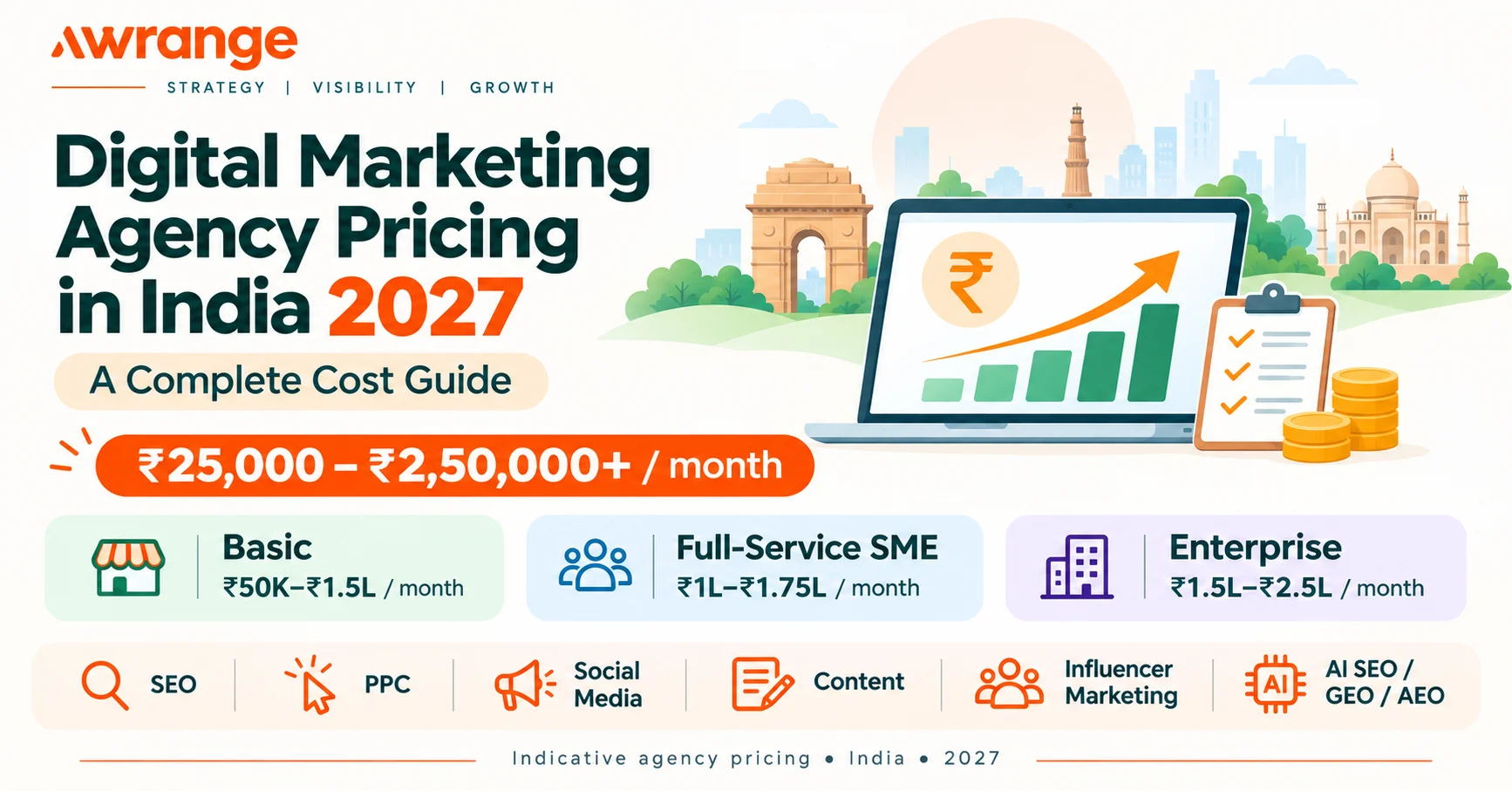
Digital Marketing Agency Pricing in India 2027: Complete Cost Guide
Most businesses in India go through two or three agencies before finding one that actually delivers results. The ones wh…
Read More
SEO Services in Pune: What They Cost and What You Get (2026)
Quick answer: SEO services in Pune usually cost Rs 15,000 to Rs 30,000 a month for a small local business, […]
Read More
Affordable SEO Packages in India for Startups
For most early-stage startups in India, growth isn’t optional – it’s survival. But getting noticed online without draini…
Read More